
When the Ancestors Scream: Crafting Nightmares from the Wellspring of Culture
Obsidian Skull Press
5/17/20266 min read
When the Ancestors Scream: Crafting Nightmares from the Wellspring of Culture
Alright, you brave souls and budding boogeymen, welcome back to the Obsidian Skull Press blog, Ink & Shadows. Today, we’re peeling back the scab of what truly makes horror horrifying. Forget your generic masked killers for a sec, because we’re diving into the delicious, unsettling depths of culture and its power to birth nightmares that stick to your soul like the fetid reek of graveyard dirt. And for you logodaedaluses, you capricious coiners of new words out there, this isn’t just intellectual masturbation; it’s a masterclass in crafting dread that resonates.
See, fear isn't born in a vacuum. It’s cultured. It’s seasoned. It’s the specter of a forgotten ancestor whispering warnings, the echo of historical trauma, the gnawing anxiety of being “othered.” As the brilliant Tananarive Due, a doyenne of Black horror, puts it, "The biggest thing I’ve learned is that I find the real world much more frightening than anything I can write about in my books." (Black Heritage in Horror: An Interview With Tananarive Due, 2022).
And that, my friends, is where the magic – and the terror – lies.
So, how do we, as writers, tap into this potent wellspring? How do we move beyond the superficial and craft horror that’s both terrifying and transcendent?
The Altar of Authenticity: Drawing from Your Roots (or Researching Them Vigorously)
First off, if you're writing from a culture not your own, do your damn homework. Authenticity isn't just good practice; it's ethical. Misrepresenting cultural anxieties or traditions can be, frankly, more offensive than a poorly executed jump scare.
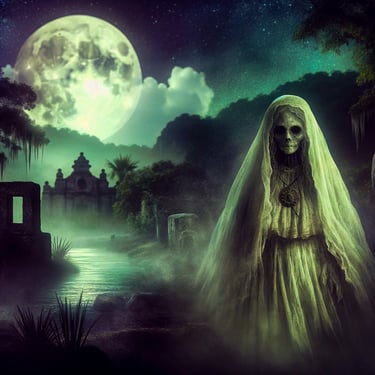
Let’s look at Latinx horror. It’s not just about La Llorona, a spectral figure embodying maternal grief and the weight of societal expectations, as D.R. Perez astutely observes in her analysis of folklore (Perez, 2008). It's about the simmering fear of la brujería, the power and perceived danger of witchcraft, often rooted in historical persecution and the survival of indigenous beliefs. For writers, this means understanding the specific nuances: Is it a curse passed down through generations? Is it the fear of the unknown force that governs nature?
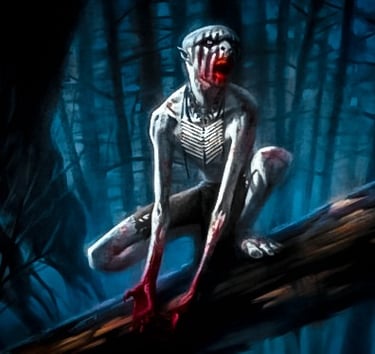
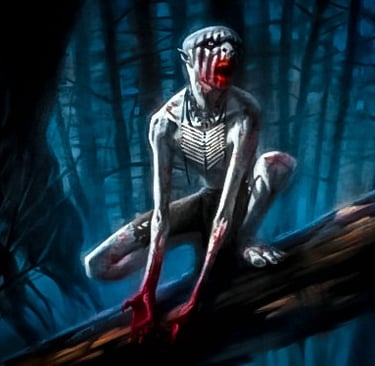
Consider Indigenous horror. It’s a powerful conduit for exploring the devastating legacy of colonialism. The Wendigo, for instance, is more than just a cannibalistic creature of the woods. As Robin Wall Kimmerer subtly weaves into her broader ecological narratives, the insatiable hunger of the Wendigo can represent the destructive greed of external forces and the desperation that arises from dispossession and cultural erosion (Kimmerer, 2013). For writers, this offers a rich vein for exploring themes of environmental destruction, cultural assimilation, and the primal fight for survival. Insight: Understand that for many Indigenous communities, the "supernatural" is often intertwined with the natural world and historical injustices. Their horror isn't just about spooks; it's about lived experience.
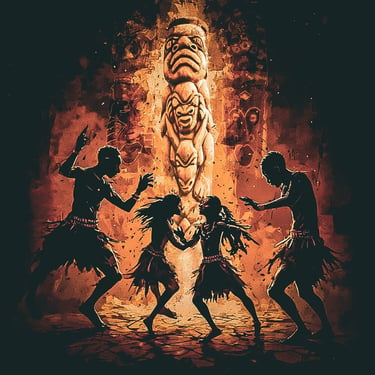
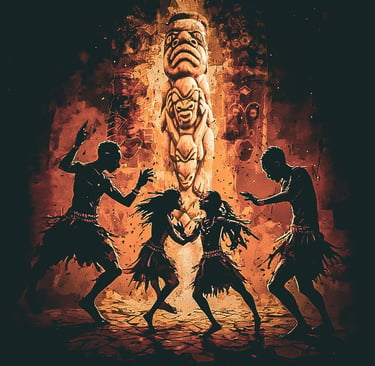
African horror, too, is a vast and fertile ground. Think about the complex portrayals of Jinn in various Islamic and African traditions – beings that exist in liminal spaces, capable of both benevolence and malevolence. This taps into a primal fear of the unseen, a force beyond human comprehension, amplified by the historical and ongoing struggles faced by African communities globally. As author Nnedi Okorafor, a pioneer of Africanfuturism, often emphasizes, her work draws from the richness of African mythology and everyday life, infusing it with science fiction and horror elements that feel both ancient and futuristic (Okorafor, 2019).
And let's not shy away from the LGBTQIA+ experience. For too long, queer characters were relegated to the "victim" role. But horror can be a potent tool for reclaiming narratives and exploring unique anxieties. The fear of the closet as a tomb, the societal ostracization that feels monstrous, the terror of rejection – these are potent wells of horror. As Carmen Maria Machado, a master of feminist and queer horror, so brilliantly demonstrates in her work, the mundane can become terrifying, and the body itself can be a site of horror and transformation (Machado, 2017).
Tip: Immerse yourself in the folklore, the history, and contemporary voices.
Ask yourself: what are the specific societal pressures or historical traumas that inform this fear?
Advice: Don't be afraid to blend the ancient with the modern. Explore how historical traumas, like the transatlantic slave trade, continue to manifest in contemporary anxieties and the supernatural.
Tip: Explore the specific vulnerabilities and resilience of LGBTQIA+ characters. What are the societal "monsters" they face, and how can the supernatural mirror or amplify these fears?
The Writer's Grimoire: Tips for Conjuring Culturally-Infused Horror
Embrace Specificity: Generic monsters are, well, boring. Instead, delve into the specific fears that resonate within a particular culture. Is it the fear of a broken promise to the ancestors? The fear of losing your language? The fear of a particular historical injustice? These are far more potent than a nameless ghoul. As Silvia Moreno-Garcia, author of Mexican Gothic, notes, "The scariest things are often the ones that are intimately familiar, but twisted." (Moreno-Garcia, 2020).
Interrogate the "Other": Horror often thrives on the fear of the unknown, the “other.” But by exploring how different cultures define and experience “otherness,” you can create truly unsettling narratives. This can be about internal struggles within a community or external threats from dominant cultures.
The Ancestral Echo: Use folklore, mythology, and oral traditions not as mere window dressing, but as integral parts of your narrative. These stories often carry the weight of generations of lived experience and collective anxieties. Advice: Research local legends, family histories, and spiritual practices. Understand the why behind the myth.
Subvert Tropes: Many horror tropes are rooted in Western anxieties. Challenge them. Flip them. What happens when the “monster” is actually a victim of societal oppression? What happens when the source of terror is something seemingly mundane but culturally loaded?
Dialogue is Key: If you are venturing into a culture not your own, seek out beta readers and sensitivity readers from that background. Their insights are invaluable and can save you from unintentional offense. As Author and Editor L.E. Daniels, who masterfully blends social commentary with horror, often discusses, the nuances of lived experience are crucial for authentic storytelling (VIRTUAL: FLIPPING THE LID ON MENTAL ILLNESS IN HORROR StokerCon 2024 Panel Report, 2024).
Ultimately, the most terrifying horror is the kind that makes you look inward, the kind that exposes uncomfortable truths about ourselves and our societies. By tapping into the rich, diverse wellspring of cultural anxieties and histories, you can craft nightmares that are not only spine-chilling but also deeply meaningful.
The Final Incantation: Let Your Culture Be Your Scare
So, go forth, writers. Dig into the shadows. Listen to the whispers of your ancestors, your communities, your own lived experiences. Because when the ancestors scream, that’s when the real horror begins.
Bibliography
Black Heritage in Horror: An Interview with Tananarive Due. (2022, February 14). https://horror.org/black-heritage-in-horror-an-interview-with-tananarive-due/
Kimmerer, R. W. (2013). Braiding sweetgrass: Indigenous wisdom, scientific knowledge and the teachings of plants. Milkweed Editions. https://ccncsj.ca/wp-content/uploads/2025/01/Braiding-Sweetgrass-Robin-Wall-Kimmerer.pdf
Her body and other parties | Graywolf Press. (2017, October 3). https://www.graywolfpress.org/books/her-body-and-other-parties
Moreno-Garcia, S. (2023, January 10). Mexican Gothic | Silvia Moreno-Garcia. Silvia Moreno-Garcia | Writer/Editor. https://silviamoreno-garcia.com/writing/mexican-gothic/
Okorafor, N., PhD. (2019). Africanfuturism defined. Nnedi’s Wahala Zone Blog. https://nnedi.blogspot.com/2019/10/africanfuturism-defined.html
Perez. (2008). There was a woman: La llorona from folklore to popular culture. ResearchGate. https://www.researchgate.net/publication/291763095_There_was_a_woman_La_llorona_from_folklore_to_popular_culture
VIRTUAL: FLIPPING THE LID ON MENTAL ILLNESS IN HORROR StokerCon 2024 Panel Report. (2024, June 22). https://horror.org/virtual-flipping-the-lid-on-mental-illness-in-horror-stokercon-2024-panel-report/
GENERAL INQUIRIES
SUBMISSIONS
submissions@obsidianskullpress.com
EDITOR-IN-CHIEF | FOUNDER
tlhutton@obsidianskullpress.com
ASSISTANT EDITOR
devon.k@obsidianskullpress.com
ARC GROUP
© 2025-2026 Obsidian Skull Press, LLC. All Rights Reserved

Ink & Shadows
Causes we Support






Obsidian Skull Press is dedicated to amplifying transformative narratives through the lens of marginalized global communities. We operate with integrity, transparency, and a fierce commitment to representation.
Cultura Nocturna ARC Group
FOLLOW US
CONTACT US


Author Services