
The Art of Storytelling: Tips & Tricks From the Pros
TL Hutton | Obsidian Skull Press
5/4/20264 min read


The Art of Storytelling: Tips & Tricks From the Pros
Brought to you by Obsidian Skull Press
Welcome, fellow word‑smiths! Whether you’re polishing a debut novel, drafting a short story for a contest, or simply dreaming up the next epic saga, mastering the craft of storytelling is the secret sauce that turns ordinary prose into unforgettable magic. Below, we’ll unpack the very same tricks seasoned authors swear by—backed by research, industry insights, and a splash of good‑old OSP (Obsidian Skull Press) charm.
“Stories are the currency of humanity.”
—Robert McKee
Ready to become a storytelling alchemist? Let’s dive in!
1. Hook ’Em From the First Line
A great story grabs readers immediately. Think of the opening as a first date—you want intrigue, personality, and a hint of mystery.
Use a vivid image or startling fact – “Lively earthen aromas wafted from the steaming cup in his hand, a spectral gossamer dancing the lascivious Juana la Cubana about his nostrils, fogging the lenses of his Armani glasses.”
Ask a provocative question – “What would you do if you woke up with someone else’s memories?”
Pro tip: The Harvard Business Review states that a study on attention spans shows readers skim the first 100 words to decide if they’ll stay (see: HBR – Keep Your Writing Simple).
Your action: Draft three different openings for your current project. Pick the one that makes your heart race the fastest.
2. Build Tension—Don’t Let It Flatline
Tension is the engine that keeps the plot moving. It’s not just “danger”; it’s emotional stakes that make readers care.
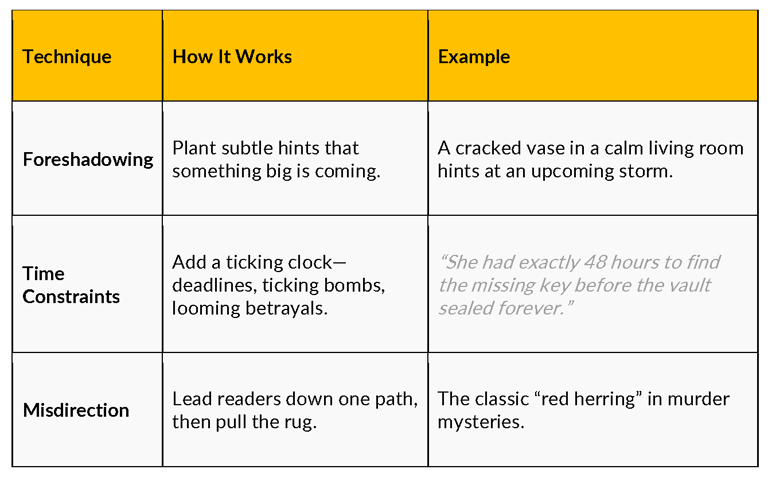
Read more about building suspense in The Write Practice’s guide: How to Build Tension in a Scene: 3 Nail-Biting Ways.
Your action: Insert a time‑limit element into your story’s next chapter.
3. Craft Believable, Multi‑Dimensional Characters
Characters should feel like real humans, even in fantastical worlds. Follow the “3‑D” rule:
Desire – What do they want right now?
Flaw – What stands in their way (emotionally or physically)?
Change – How do they evolve by the story’s end?
“A character is a story’s spine; the plot is its flesh.” – Stephen King
Resource: Writer’s Digest breaks down character building in depth: Alison Schaffir: On Writing Three-Dimensional Characters.
Your action: Write a 150‑word “character snapshot” that captures your protagonist’s desire, flaw, and the first hint of change.
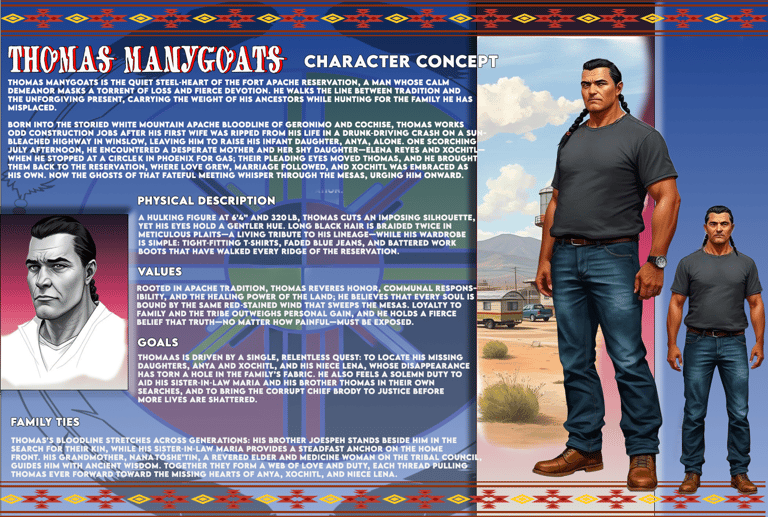
Original Character Concept and art by TL hutton for "where the wind Cries Red" 2025-2026
A twist works only when the reader could have seen it in hindsight—the “aha!” moment.
Lay the groundwork early (breadcrumbs).
Make the twist logical within the story’s rules.
Raise the stakes after the reveal.
Case Study: In Gillian Flynn’s Gone Girl, the “missing wife” twist is foreshadowed through diary entries and media satire, making the shock both surprising and inevitable.
Learn more: The Creative Penn explains the anatomy of a perfect twist: Writing Fiction: Tips On Plot With Roz Morris.
Your action: Identify a potential twist in your manuscript, then list three clues you can sprinkle throughout earlier chapters.
4. Plot Twists That Feel Earned, Not Forced
5. Dialogue That Drives Story Forward
Good dialogue does three things simultaneously: reveal character, advance the plot, and add subtext.
Avoid “on‑the‑nose” speech – characters rarely say exactly what they think.
Use pauses, interruptions, and body language to convey tension.
Read aloud – if it sounds stilted, rewrite.
Quick tip: The BBC Writers’ Academy suggests a “dialogue test”: if you can replace the speech with a single sentence and the story still works, the dialogue is likely unnecessary.
Your action: Revise a recent dialogue scene, stripping any line that doesn’t push the plot or reveal something new about a character.
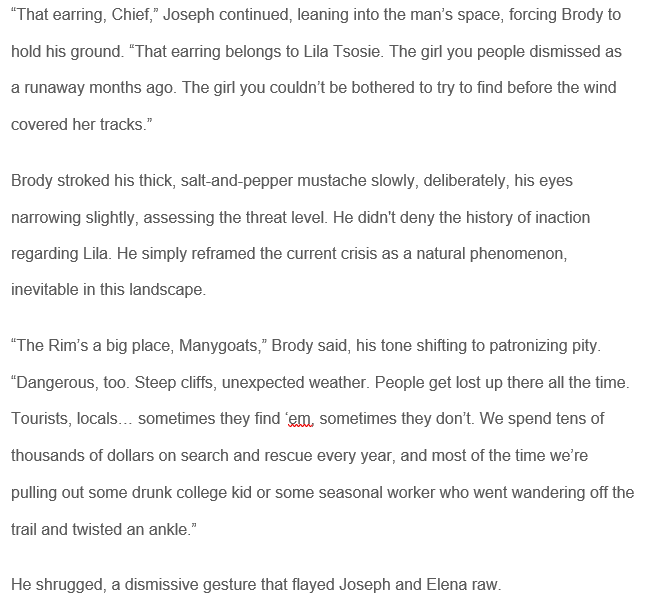
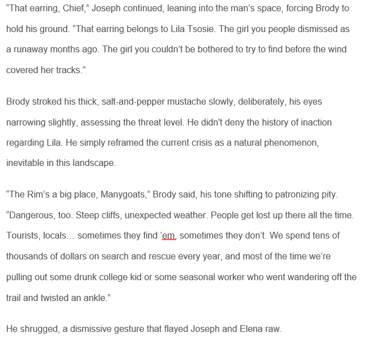
Source: TL Hutton's "Where the Wind Cries Red"
6. The Power of Revision – “Write. Then Kill.”
Even the best writers are ruthless editors. The Iowa Model - Purdue OWL emphasizes multiple passes:
Macro edit – Structure, pacing, and arc.
Micro edit – Sentence flow, word choice, rhythm.
Proofread – Grammar, typos, formatting.
Your action: Schedule a 2‑hour block tomorrow devoted solely to macro editing your current draft.
“You can’t edit a blank page.” – Stephen King
Put It All Together – Your Mini‑Story Challenge
Hook – Write an opening line that uses vivid imagery.
Tension – Insert a 24‑hour deadline for your protagonist.
Character – Give them a secret flaw that will surface under pressure.
Twist – Hint at a hidden ally who may betray them.
Dialogue – Craft a short exchange that reveals the protagonist’s fear.
Share your results in the comments below, or tag us on Facebook @ObsidianSkullPress using #OSPStorySprint. We’ll feature our favorites in next month’s newsletter!
📣 Call to Action
Subscribe to our newsletter for exclusive writing prompts, author interviews, and behind‑the‑scenes looks at upcoming OSP releases. 👉 Join the OSP Community
Become a beta‑reader for our next anthology and get a free e‑book as a thank‑you! 👉 Beta‑Reader Sign‑Up
Remember: Great storytelling isn’t a secret talent; it’s a skill you can sharpen—one page at a time. Keep writing, keep revising, and let the world hear your voice.
Happy plotting, fellow creators!
References
Keep Your Writing Simple. (2020, February 26). Harvard Business Review. https://hbr.org/tip/2020/02/keep-your-writing-simple
Weems, S. (2020, January 10). How to build tension in a scene: 3 Nail-Biting Ways. The Write Practice. https://thewritepractice.com/how-to-build-tension/
Brewer, R. L. (2023, March 7). Alison Schaffir: On Writing Three-Dimensional Characters. Writer'S Digest. https://www.writersdigest.com/write-better-fiction/alison-schaffir-on-writing-three-dimensional-characters
Penn, J., & Penn, J. (2016, July 20). Writing Fiction: Tips on plot with Roz Morris | The Creative Penn. The Creative Penn - Writing, Self-publishing, Book Marketing, Making a Living With Your Writing. https://www.thecreativepenn.com/2015/04/24/writing-fiction-plot-roz-morris/
Welcome to BBC writers. (n.d.). https://www.bbc.co.uk/writers
The Iowa Model - Purdue OWL® - Purdue University. (n.d.). https://owl.purdue.edu/owl/subject_specific_writing/creative_writing/teachers/workshop_creative_writing_guide/the_iowa_model.html
GENERAL INQUIRIES
SUBMISSIONS
submissions@obsidianskullpress.com
EDITOR-IN-CHIEF | FOUNDER
tlhutton@obsidianskullpress.com
ASSISTANT EDITOR
devon.k@obsidianskullpress.com
ARC GROUP
© 2025-2026 Obsidian Skull Press, LLC. All Rights Reserved


Ink & Shadows


Causes we Support







Obsidian Skull Press is dedicated to amplifying transformative narratives through the lens of marginalized global communities. We operate with integrity, transparency, and a fierce commitment to representation.
Cultura Nocturna ARC Group
FOLLOW US
CONTACT US


Author Services