
Ink & Shadows: Shining a Light on the MMIWR Crisis
At Obsidian Skull Press, we believe the power of storytelling can illuminate even the most challenging truths. Our blog, 'Ink & Shadows,' is dedicated to narratives that demand attention, and today, we address a critical national tragedy: the Missing and Murdered Indigenous Women and Relatives (MMIWR) crisis. This crisis, recognized by sovereign nations, advocates, and the Canadian federal government, is an ongoing genocide and a profound national wound...
Obsidian Skull Press
5/20/20264 min read
Ink & Shadows: Shining a Light on the MMIWR Crisis
At Obsidian Skull Press, we believe the power of storytelling can illuminate even the most challenging truths. Our blog, 'Ink & Shadows,' is dedicated to narratives that demand attention, and today, we address a critical national tragedy: the Missing and Murdered Indigenous Women and Relatives (MMIWR) crisis. This crisis, recognized by sovereign nations, advocates, and the Canadian federal government, is an ongoing genocide and a profound national wound (Missing and Murdered Indigenous Women and Relatives | NIWRC, 2001).
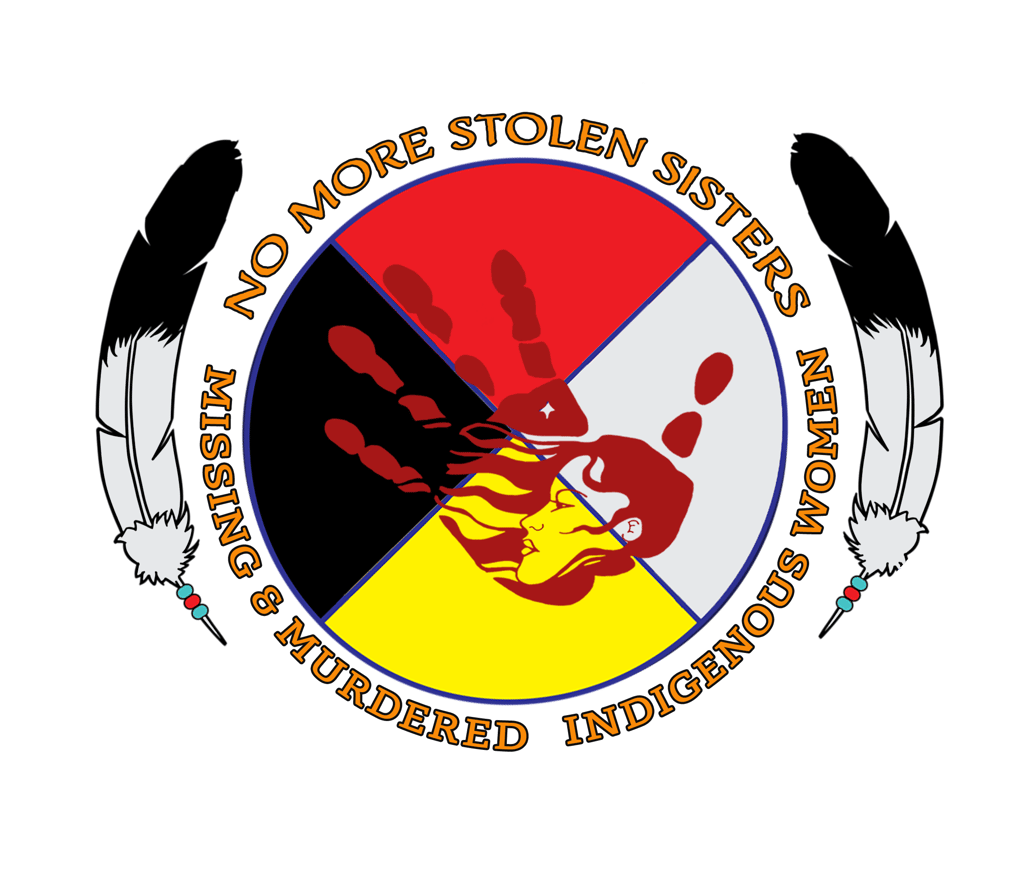
MMIW|Four directions vinyl decal design by tl hutton 2026
The Stark Realities of the MMIW Crisis
The statistics surrounding the MMIWR crisis are devastating. Indigenous women face murder rates that are alarmingly high, with some reservations reporting rates over ten times the national average (U.S. Department of Justice, as cited in U.S. House of Representatives Committee on Natural Resources, 2020). Homicide is a leading cause of death for young Indigenous women, and they constitute a disproportionate percentage of total homicides in both the U.S. and Canada (U.S. Department of Justice, as cited in U.S. House of Representatives Committee on Natural Resources, 2020). Furthermore, over 84% of Indigenous women have experienced violence in their lifetime, highlighting the pervasive nature of this suffering (Missing and Murdered Indigenous Women and Relatives | NIWRC, 2001).


Photo by hamed farahpour: https://www.pexels.com/photo/black-and-white-portrait-of-woman-with-painted-handprint-32923354/
Veiled by Gaps: Data and Media Challenges
A significant barrier to addressing this crisis is the severe lack of data and media coverage. Thousands of Indigenous individuals go missing each year, yet studies indicate that up to 95% of these cases receive no mainstream media attention (House Appropriations Committee, 2024). Compounding this issue, many cases are not adequately logged in federal databases like NamUs, and they are significantly more likely to remain unresolved compared to other demographics attention (Indian Affairs (IA), n.d.).
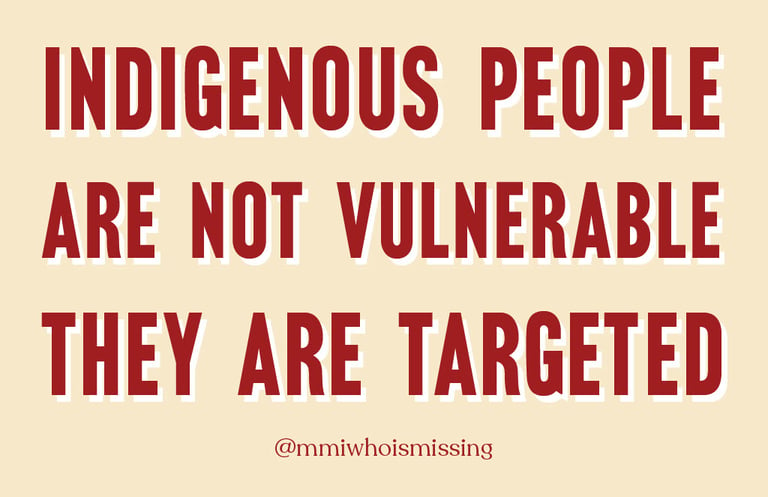
Source: Mmiwhoismissing. (n.d.). Mmiwhoismissing. Mmiwhoismissing. https://mmiwhoismissing.org/share
Systemic Roots: Jurisdictional and Societal Factors
The MMIWR crisis is deeply intertwined with jurisdictional and systemic issues. The majority of violent crimes against Indigenous women are committed by non-Native individuals, which complicates legal jurisdiction (Urban Indian Health Institute, 2018). Gaps in jurisdiction between tribal, federal, and state authorities, alongside persistent socioeconomic vulnerabilities, create a complex environment that allows this crisis to persist wound (Missing and Murdered Indigenous Women and Relatives | NIWRC, 2001).
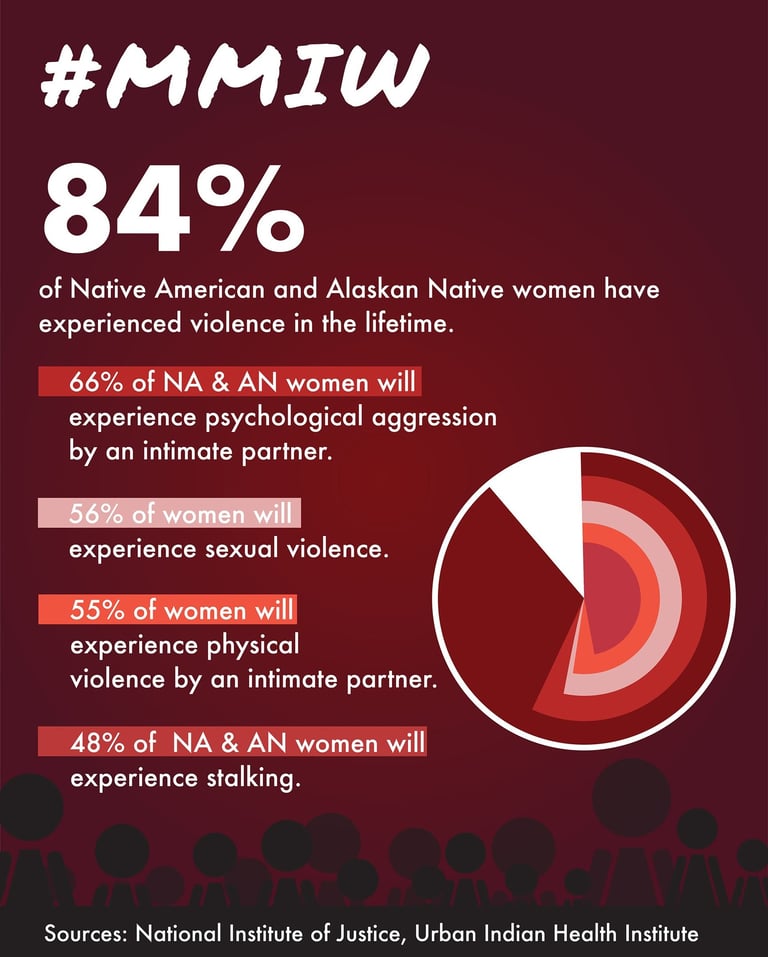
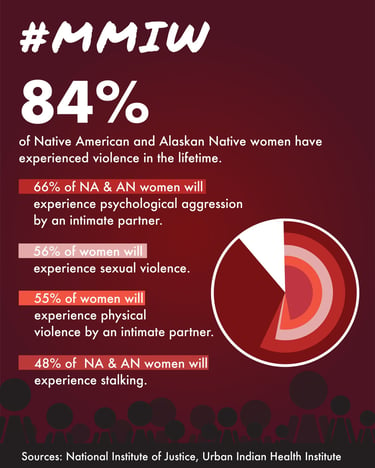
Behance. (n.d.). Sierra Revis - freelance in Okmulgee, OK, USA. Behance. https://www.behance.net/SierraRevis/gallery/77763333/MMIW-Missing-and-Murdered-Indigenous-Women/modules/451476719
Mobilizing for Change: Red Dress Day and Beyond
May 5th, known as Red Dress Day, serves as a National Day of Awareness dedicated to honoring victims and advocating for justice. Organizations like the National Indigenous Women’s Resource Center (NIWRC) are actively working on policy, data improvement, and strengthening tribal law enforcement responses to combat this crisis (Missing and Murdered Indigenous Women and Relatives | NIWRC, 2001).


Behance. (n.d.). Morgan Littlechief, Saskatchewan, Canada. Love for MMIWG2S+ (1) | Images :: Behance. 2026 Behance.https://www.behance.net/gallery/244196125/Love-for-MMIWG2S/modules/1409684643
How We Can All Contribute to Bringing Our Sisters Home
We cannot remain indifferent while our sisters, mothers, and daughters are treated as disposable. We must become the megaphone for those who have been silenced and remain relentless until every missing relative is brought home. Join us in this vital work.
Amplify Indigenous Voices: Actively follow and share the advocacy of organizations like the NIWRC and other local Indigenous-led groups. Prioritize sharing cases when they are brought forward by these organizations.
Pressure Your Representatives: Advocate for your government to close jurisdictional loopholes. Support legislation that empowers tribal law enforcement to prosecute non-Native offenders on tribal lands and increases funding for victim services and accurate data collection.
Demand Media Accountability: If you notice a lack of coverage for a missing person case in your area, contact local media outlets. Inquire about the reasons for the absence of coverage and insist that they apply the same rigor to Indigenous victims as they do to other demographics.
Observe and Educate: On May 5th (Red Dress Day), wear red to honor the lives lost and the survivors who carry the trauma of this violence. Utilize this day as an opportunity to educate your own circles about the systemic roots of this crisis.
Listen to Families: If you know a family affected by the MMIW crisis, offer support on their terms. Whether it's donating to search funds, attending vigils, or simply offering a listening ear, always prioritize their guidance on what is most needed.
Awareness is the crucial first step, but true justice demands action. Here's how you can help turn the tide:
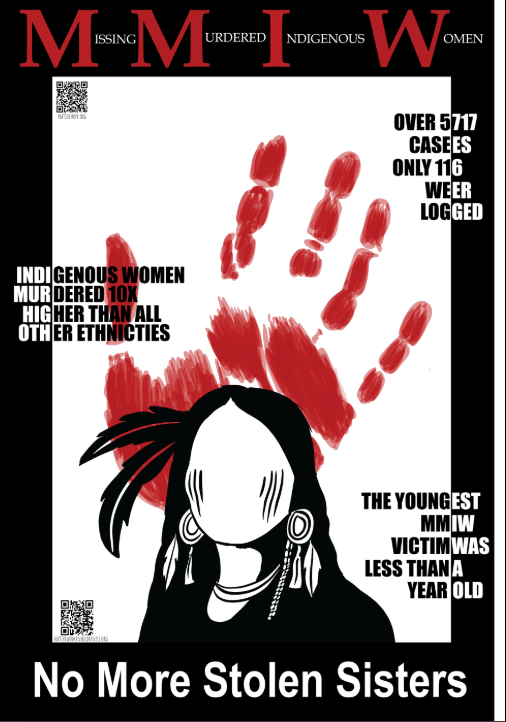
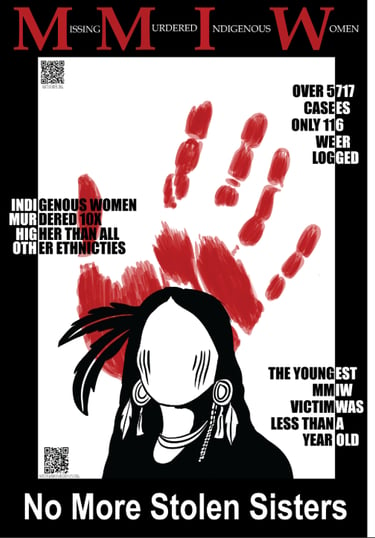
Behance. (n.d.). jacob valencia - Student in Minneapolis | Silent No More (2), MN, USA. Behance. https://www.behance.net/jacobvalencia2/gallery/193939141/Silent-No-More/modules/1097361959
Bibliography
Missing and murdered Indigenous women and relatives | NIWRC. (2001, July 28). https://www.niwrc.org/mmiwr-awareness
House Appropriations Committee. (2024, November 21). Oversight Hearing – Investigating the crisis of missing and murdered Indigenous women - Panel 1 [Video]. YouTube. https://www.youtube.com/watch?v=7bhLNW1bfgI
Indian Affairs (IA). (n.d.). Missing and Murdered Indigenous people crisis. Indian Affairs. https://www.bia.gov/service/mmu/missing-and-murdered-indigenous-people-crisis
Urban Indian Health Institute. (2018). Missing and Murdered Indigenous women & girls: A snapshot of data from 71 urban cities in the United States. Seattle Indian Health Board. https://www.uihi.org/resources/missing-and-murdered-indigenous-women-girls/
Welcome | NIWRC. (n.d.). https://www.niwrc.org/
GENERAL INQUIRIES
SUBMISSIONS
submissions@obsidianskullpress.com
EDITOR-IN-CHIEF | FOUNDER
tlhutton@obsidianskullpress.com
ASSISTANT EDITOR
devon.k@obsidianskullpress.com
ARC GROUP
© 2025-2026 Obsidian Skull Press, LLC. All Rights Reserved


Ink & Shadows


Causes we Support






Obsidian Skull Press is dedicated to amplifying transformative narratives through the lens of marginalized global communities. We operate with integrity, transparency, and a fierce commitment to representation.
Cultura Nocturna ARC Group
FOLLOW US
CONTACT US


Author Services