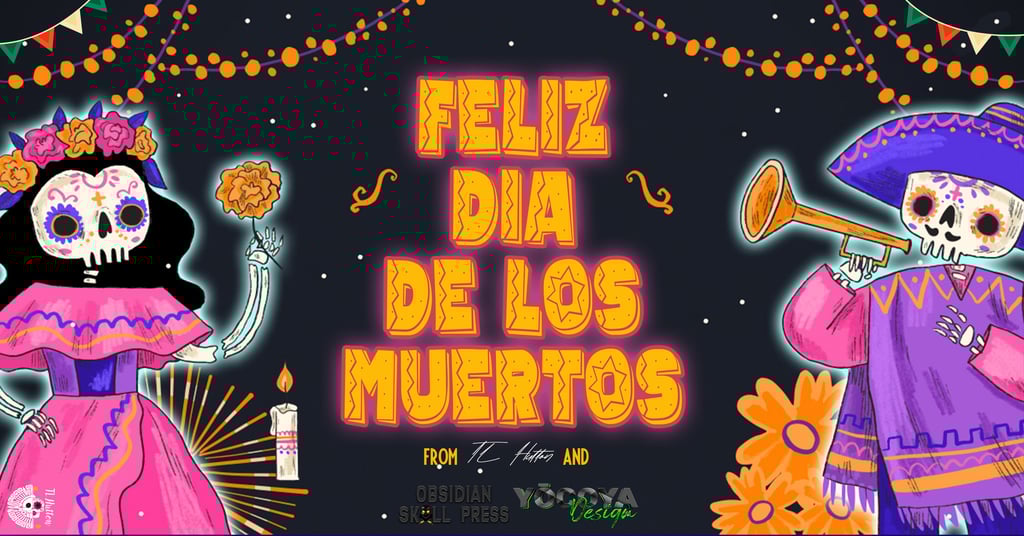
Feliz Día de los Muertos
Día de Muertos, celebrated on November 1st and 2nd, honors deceased children and adults, respectively, through a joyful reunion with their spirits. This vibrant tradition, rooted in over 3,000 years of Mesoamerican culture, blends Indigenous beliefs with Catholic customs, emphasizing the continuity of life and death. Central to the celebration is the ofrenda, an altar adorned with marigolds, favorite foods, photos, and candles, symbolizing love and remembrance. For the Latino community, this event is crucial for preserving cultural identity and passing down traditions, highlighting that love and memory keep the deceased alive in spirit.
DÍA DE MUERTOSDÍA DE LOS INOCENTESCULTURAL RESILIENCEMESOAMERICAN ORIGINSINDIGENOUS TRADITIONSCULTURAL SYNCRETISMOBSIDIAN SKULL PRESS
TL Hutton
11/1/20253 min read
My post content
For Mexicanos and the broader Latino diaspora, engaging in the traditions of Día de Muertos is far more than observing a holiday; it is a vital affirmation of cultural resilience and historical continuity. It serves as a powerful conduit for passing down ancestral knowledge, values, and traditions to younger generations, ensuring that the deceased remain active, cherished members of the family unit (Rodríguez & Pérez, 2022). This annual practice reinforces the idea that love transcends death, and memory keeps our loved ones eternally present.
Día de Muertos is a global cultural touchstone, recognized by UNESCO as an Intangible Cultural Heritage of Humanity. This prestigious designation underscores its significance—showcasing a unique worldview where the sadness of loss gracefully coexists with joy in remembrance. It serves as a necessary yearly reminder in Latino culture that while the pain of loss is real, the love, lessons, and legacy of those who have passed are indeed eternal.
As the fragrant cempasúchil petals light the way and the velas flicker, may the spirits of your loved ones find their way home tonight. May the memories shared bring comfort, joy, and a profound sense of connection across generations.
QUE VIVAN LOS QUE SE FUERON! (Long live those who have gone!)
#DíaDeMuertos #DayOfTheDead #MexicanCulture #LatinoLife #Ofrendas #CulturalHeritage #RememberTheDead #VivaMexico #Familia #Ancestors #CulturalAwareness #Tradition #LifeAndDeath
REMEMBERING, HONORONG, CELEBRATING
Feliz Día de los Muertos amigos y seguidores!
Today, November 1st, marks Día de los Inocentes, a special day dedicated to the spirits of children, followed by tomorrow, November 2nd, Día de los Muertos, honoring deceased adults. Millions across Mexico and the global Latino diaspora pause for one of the world’s most profound and beautiful traditions: Día de Muertos. Far from being a somber event or a spooky holiday, this multi-day celebration is an annual, joyous reunion built on the deeply held belief that our beloved deceased return to walk among us for a night. It is a powerful affirmation of life, memory, and the enduring strength of family connections.
THE ENDURING LEGACY: ORIGINS BEYOND TIME
The vibrant tapestry of Día de Muertos weaves together threads stretching back over 3,000 years. Its true origins are distinctly Mesoamerican, long predating the arrival of Europeans. Indigenous civilizations such as the Aztec, Maya, and Purepécha held beliefs about the cycle of life and death, often dedicating elaborate rituals to deities like Mictecacihuatl, the "Lady of the Dead." Unlike European perspectives that often feared death, these ancient cultures viewed it as a natural progression and a temporary absence, integral to existence (Salgado-Gordillo, 2020).
With the arrival of Spanish colonists and their introduction of Catholicism, these rich Indigenous practices were not erased but rather merged with the Catholic observances of All Saints’ Day and All Souls’ Day. This cultural syncretism gave birth to the unique, spiritual, and colorful holiday we celebrate today, a testament to resilience and adaptation (Carmona, 2018).
THE HEART OF THE CELEBRATION: THE SACRED OFRENDA
At the genuine core of Día de Muertos lies the ofrenda, or altar. This beautifully constructed display is not an act of worship, but a heartfelt invitation, a bridge built with love to welcome departed loved ones back home. Every element carefully placed on the altar serves a specific, symbolic function, meticulously prepared to guide and comfort the returning spirits:
• Cempasúchil (Marigolds): The brilliant orange and yellow hues, combined with their strong, distinct scent, are believed to guide spirits home from the cemetery, lighting their path through the veil between worlds (Carmona, 2018).
• Water and Favorite Foods: After their long journey from the spirit world, the deceased are thought to be thirsty and hungry. Offerings of fresh water, their favorite dishes, and pan de muerto (bread of the dead) are placed to quench their thirst and satisfy their hunger.
• Calaveras (Skulls): Whether crafted from sugar, clay, or papier-mâché, these iconic skulls symbolize death accepted and embraced. They represent the cyclical nature of existence and serve as a playful, yet poignant, reminder that death is a natural and inevitable part of life, not an end but a transformation.
• Photos and Personal Items: Images of the departed, along with their cherished possessions, are placed to personalize the altar, ensuring the returning spirits feel recognized and loved.
• Velas (Candles): These flickering lights represent faith and hope, illuminating the path for the spirits and symbolizing the enduring presence of memory.
A PILLAR OF IDENTITY: DIA DE LOS MUERTOS IN LATINO LIFE

Carmona, R. (2018). The meaning of the traditional altar of the Day of the Dead. Fondo Editorial de la Universidad Autónoma del Estado de México.
Rodríguez, M. A., & Pérez, J. L. (2022). Cultural resilience and identity: Día de Muertos in the Latino diaspora. Journal of Ethnic and Cultural Studies, 8(2), 56-71.
Salgado-Gordillo, M. (2020). Mesoamerican worldview on death and rebirth: The origins of Día de Muertos. Ancient Mesoamerica Review, 15(3), 121-135.
Image: Original Illustration/Design by TL Hutton Oct 31 2025
References:
© 2025 TL Hutton | Obsidian Skull Press. All Rights Reserved
Follow us




Causes we Support