Creating from Chaos
Reflections and my creative process behind my upcoming Cultural Horror novella, "The Open Door."
SOCIAL JUSTICEEQUITY MATTERSON WRITINGMARGINALIZED VOICESFINDING INSPIRATIONINCLUSIONSYSTEMIC CHANGETHE CREATIVE PROCESSDIVERSITY EQUITY INCLUSIONALLYSHIPLGBTQIA+ RIGHTS
TL Hutton
10/24/202514 min read
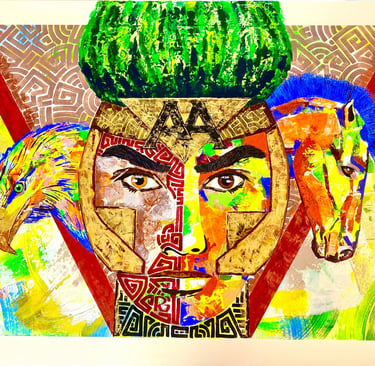
“Todo acto de creación, es un acto de amor.”
– José Revueltas
Literal translation: Every act of creation is an act of love.
The words of the revolutionary Mexican writer José Revueltas keep echoing in my head this morning, a restless tide of thought and feeling.
Revuletas, a man who knew struggle and confinement intimately, believed that creation, in all its forms, springs from a wellspring of love and passion. Love for the story that claws to be told, the image that demands to be painted, the idea that yearns to be shared. But what happens when that love is born from the ashes of trauma, from the confines of a prison cell, or from the front lines of social upheaval?
Revuletas' life was a testament to this very question. A political activist, a voice for the marginalized, he was branded an "intellectual author" of the 1968 student movement and imprisoned in the infamous Palacio de Lecumberri. From within those suffocating walls, he penned "El Apando" (The Punishment Cell), a stark and unflinching portrayal of prison life.
Even in the face of brutality, Revueltas continued to create, to love, to speak truth to power.
And that brings me here, wrestling with my own creative urges, my own experiences, and the burning question: Can we truly create from a place of love when the world around us is steeped in pain and injustice?
When Monsters Walk Among Us: Finding Purpose in the Dark
I've always been drawn to the unsettling, the things that crawl under your skin and whisper in the dead of night. My imagination thrives in the realm of demons, grotesque creatures, and the shadows that dance on the fringes of sanity. I’ve built a career exploring the macabre, unearthing the horrors that lurk in the hidden corners of our world–be it in whispered tales from the Ozark Mountains, the sun-baked secrets of the Sonoran Desert, or the hushed vespers echoing through Mexico City streets.
But lately, something has shifted. My perspective has widened, and my muse, that tenacious little perra she can sometimes prove to be, has been scratching at me relentlessly. She whispers that this fascination with the dark, this knack for understanding what truly terrifies us, could be used for something more. That the real monsters, the ones that truly haunt our world, aren't found in folklore or nightmares, but in the hearts of those who cling to hate and prejudice.
Not long ago, I found myself in the crosshairs. Attacked, slandered, reviled, even threatened. Honestly, it's par for the course when you live life outside the lines; I’ve learned to accept it, and frankly, I found the whole thing a bit…pathetic. The attacks weren't even about my work, per se, but stemmed from my expressing my support for the LGBTQIA+ community.
That’s when my muse truly dug her claws in.
I am a heterosexual male. I can never fully grasp the experiences of those within the LGBTQIA+ community. But I stand as an ally, a staunch believer in equality and acceptance. My life has been enriched by friendships with people from all walks of life, including vibrant and resilient individuals within this community. Yet, beneath the surface of their strength often lie scars inflicted by prejudice, discrimination, and violence.
Thinking on this, a nerve was struck within me: I could relate. Not in the same respect, never, but in a parallel sense. My views and beliefs have always been unconventional, often challenging the social status quo. My abstract concepts are misunderstood by many, perhaps even deemed a threat, maybe even landing me on some obscure governmental agency’s watchlist. This would not surprise me in the least, considering the political climate today; if you do not conform, you are a threat.
I’ve learned that what people don't understand, they fear. And what they fear, they often try to destroy.
And that's where the macabre comes back in. I've always trafficked in the grotesque, exploring the things that slither in the unseen corners of our minds, the shadowed chambers of our hearts, the deepest recesses of our souls. My muse began to claw at me, relentlessly whispering that this fascination with the dark could be used for something more.
Something greater than myself.
It dawned on me: the monsters aren't just lurking in the shadows of my stories. They are real, they are present, and they are actively preying on the vulnerable. They cloak themselves in ignorance, fear, and hate, and they feed on the suffering of others; I am happy to proffer a plethora of cultural and historical contexts if you would like.
And perhaps–perhaps, the skills I've honed exploring the darkest corners of the human psyche and soul can be turned against them. Perhaps I can use my platform, my voice, and my ability to evoke the grotesque to expose these real-life monsters and the insidious ideologies they peddle.
This isn't about writing pretty stories anymore. This is about using the darkness I understand and know intimately to illuminate the darkness that needs to be eradicated. This is about finding purpose in the macabre and fighting for a world where the monsters stay in the shadows of our imaginations and never walk among us again.
The Whispers of Hate, the Seeds of Stories, and a Question of Action
Every morning, I brace myself and tune in. The news. A triple dose: Mexico in Spanish, national headlines, and the local feed.
I need to know.
I need to see the world turning, even when it’s churning, volatile, and about to implode. Lately, it feels like a constant churn of horror.
Look at the headlines today. Another mass shooting fueled by hate. A politician whipping up fear of immigrants. A school board banning books, silencing voices. Just yesterday, I saw reports of cartel violence escalating in Nogales, a stark reminder of the dangers many in communities I personally know face daily. Domestically, the fight over reproductive rights continues to rage, pitting neighbor against neighbor. ICE raids fuel xenophobia and civil unrest, instill fear. It's a relentless onslaught, a barrage of negativity that can feel crushing.
But even in the bleakest reports, there's a strange wellspring of inspiration. The human capacity for both cruelty and resilience is a constant source of fascination, feeding my imagination. The news becomes a twisted muse. A story about a border patrol agent corrupted by greed transforms into a gothic horror tale of a man haunted by the ghosts of those he betrayed. A political scandal involving corporate greed blossoms into a dystopian thriller about a society controlled by a shadowy cabal. The real horrors inspire fictional ones, allowing me to explore the darkness within ourselves in a safe, albeit unsettling, space.
Beyond the headlines, my life is woven with threads of vibrant color-from the sun-drenched beaches of Brazil to the bustling streets of Mexico City, to the tropical isles of the Philippines, to many states here in the USA–as my LGBTQIA+ friends span continents. These are people who radiate joy, courage, and authenticity. We connect regularly, sharing laughter, tears, and dreams. Whenever possible, if I am in their part of the world, I make it a point to visit them, sharing a meal, a drink, a laugh, and reaffirming the bonds that tie us together. These relationships are the bedrock of my understanding of a part of the world often overlooked, enriching my life in ways I never imagined.
And yet…these very people, these beacons of light, are increasingly vulnerable. I've witnessed the insidious creep of hate, a cancer spreading across the nation and the world. I see it in the comments sections online, in the legislative attacks on transgender rights, in the emboldened displays of bigotry. It festers in the minds of the myopic, those who blindly cling to political rhetoric and weaponize their religion, twisting it into a justification for intolerance. They are the ones who scream about "protecting children" while simultaneously denying healthcare and basic human rights to the very same vulnerable populations.
It appalls me. It disgusts me. It fills me with a goddammed burning rage.
Last week, I had a video call with a transgender amiga of mine in Medellín, Colombia. She was considering relocating to the USA, lured by both higher educational and vocational opportunities, but paralyzed by fear. She spoke of the vitriol spewed at transgender people online, the legislative battles targeting transgender youth, and the rising tide of violence against the LGBTQIA+ community. She was already facing prejudice as a Latina woman; now, the thought of adding the burden of transphobia in the current US climate was almost unbearable.
Her fear was palpable. It settled in my gut like a stone. And that's when the question hit me, a burning ember in the darkness: What can I do? What concrete action can I take to combat this rising tide of hate? What can I do to make a difference, even a small one, for people like my friend, who deserve to live a life free from fear and persecution?
The news kept churning, the stories kept flowing, but it was not enough to just watch. It was time to act.
The question was, how?
The Enduring Echo of Art: A Writer's Journey to Purpose
Throughout history, the Arts have acted as a powerful, pervasive influence, shaping the very fabric of our lives–historically, anthropologically, sociologically, politically, and religiously. They are not mere decorations; they are reflections, critiques, and catalysts for change. Think of the French Revolution, fueled in part by the subversive narratives of Enlightenment literature and the powerful imagery of artists like Jacques-Louis David. Consider the Civil Rights Movement in the United States, where the soulful sounds of gospel music, the poignant stories of writers like James Baldwin, and the evocative photography of Gordon Parks galvanized a nation and demanded social justice. Or delve into the Renaissance, where the rediscovery of classical art and literature sparked a revolution in thought and ushered in a new era of humanism, challenging the established religious doctrines of the time.
Writing, of course, is just one vital thread in this rich tapestry of artistic expression. From epic poems like Homer's Odyssey, which shaped the moral and cultural values of ancient Greece, to the revolutionary pamphlets of Thomas Paine, which ignited the American Revolution, the written word has always possessed the power to inspire, persuade, and transform. More recently, the works of Arundhati Roy challenge societal norms and expose inequalities, while the evocative prose of Gabriel Garcia Marquez transports readers to magical realms and explores profound themes of love, loss, and the enduring power of the human spirit. Writing provides a platform for diverse voices to be heard, challenging the status quo and pushing the boundaries of understanding.
For me, writing has always been more than just a hobby; it's been a calling, a deeply ingrained need to connect with something larger than myself. From crafting fantastical tales in childhood to analyzing complex social issues in adulthood, I've always felt a profound sense of purpose in the act of putting pen to paper (or fingers to keyboard, as it were). There has always been this undeniable feeling that my words held a potential, a responsibility to contribute something meaningful to the world. Years were spent chasing ideas, experimenting with forms, and honing my craft, driven by this inherent belief.
Then, in a moment of clarity, the path became undeniably clear. It came to me, not in a thunderous roar, but in the soft, insistent murmur of what I can only describe as my muse’s voice, gently guiding me: Escribir! Write!
The directive was simple, yet profound. It wasn't just about writing; it was about embracing the potential of my voice, the power of storytelling, and the responsibility that comes with wielding words. It was about acknowledging the enduring echo of art throughout history and striving to add my own voice to that chorus. To write, to truly write, is to engage in a conversation that spans generations, to challenge assumptions, and to offer perspectives that might spark understanding and empathy in a world increasingly divided.
The Open Door: A Birth Forged in Fear
And so, "The Open Door" clawed its way into existence. Not a gentle emergence, but a turbulent birth, stained with the harsh realities faced by the LGBTQIA+ community. This wasn't a story conceived in comfortable detachment; it was born from a gut-wrenching awareness of pain and a desperate urge to give it voice.
Frankly, the process was terrifying. Insecurity gnawed at me. What if I failed? What if, despite my best intentions, I trivialized the experiences I was trying to portray? The weight of responsibility felt crushing. How could I, a cisgender person, possibly capture the nuances, the complexities, the lived truth of a community I wasn't a part of? How could I adequately represent the burden they carry, the constant navigation of prejudice and misunderstanding?
The fear was paralyzing at times. I spent sleepless nights wrestling with the ethical implications, questioning my right to even attempt such a narrative. Who was I to delve into these deeply personal, often traumatic, experiences?
The answer, when it finally came, wasn't about mimicry or appropriation. It wasn't about trying to become someone I wasn't. It was about amplification. It was about acknowledging my limitations and using my platform to elevate the voices that desperately needed to be heard. "The Open Door" wouldn't be my story, but a conduit for their stories, a space where the raw, unfiltered truth of LGBTQIA+ lives could resonate. It was about offering a stage, however imperfect, for resilience, for defiance, for the vibrant, unapologetic spirits that refuse to be silenced, even in the face of unimaginable adversity.
The journey is a tightrope walk, but one I feel compelled to undertake.
The Open Door - A Conduit, Not a Creator
"The Open Door" is a work of fiction, yes, born from my imagination. But it's critical to understand that the stories within its pages are not truly mine. They are echoes, reverberations of real lives lived on the precarious edges of society, painted in the stark hues of fear and resilience. They are the shared narratives of marginalized voices, offered to me in fragments over years of whispered conversations and unwavering trust.
As a writer, I grapple constantly with the responsibility that comes with holding these narratives. It’s not just about weaving a compelling tale; it’s about honoring the vulnerability, the pain, and the quiet strength that permeate each story. The process is a delicate dance between artistic license and respectful representation, a tightrope walk over the chasm of appropriation.
This isn't to say I haven't molded and fictionalized. To present the stories raw, verbatim, would not only betray confidences but would also likely leave them inaccessible to a wider audience. Instead, I've taken the essence, the emotional core, of what I've been told and sculpted it into something new, something that can resonate without exposing the original tellers. Names have been changed, locations obscured, and details altered, all in the service of protecting the individuals whose stories fuel the narrative.
But the heart of each tale, the underlying truth of their experiences, remains sacrosanct. The fear of walking home alone at night, knowing your very existence is seen as a threat. The suffocating weight of prejudice, the constant feeling of being watched, judged, and marginalized. The desperate struggle for acceptance and basic human dignity. These are the threads that bind the stories together; these are the truths that I strive to convey.
The weight of this responsibility is often immense. There are nights when I lie awake, wrestling with the fear that I am not doing justice to the experiences entrusted to me. That I am somehow diluting the pain, sanitizing the struggle, or, worse, exploiting it for personal gain.
This is why I consider myself a conduit, not a creator. I am merely the vessel through which these stories are finding their way into the world. The open door in the title isn't just a portal to the horrors within the narrative; it's a metaphor for the open hearts and minds of those who have shared their experiences with me. It's an invitation for readers to step inside, to listen, to empathize, and to understand the realities faced by those who are too often silenced or ignored.
Ultimately, my hope is that "The Open Door" will serve as a catalyst for conversation, a tool for empathy, and a testament to the enduring power of the human spirit in the face of adversity. It is a story born of shadows, but it is fueled by the unwavering hope for a brighter, more just future, where the open door leads not to fear and marginalization, but to understanding and acceptance.
And that hope, that powerful force, is what keeps me writing.
Beyond the Page: Confronting the Monsters in "The Open Door"
"The Open Door" isn't my typical story. It's a mirror. And what it reflects back isn't pretty. Frankly, it's fucking ugly. Forget the spectral whispers riding upon the night's breath and the creepy-crawly things that go BUMP! in the night. While those “monsters” are present to a degree, this isn't about fictional horrors lurking under the bed; it's about the very real, very human monsters that walk amongst us, disguised in the sheep's clothing of piety and prejudice.
“The Open Door” is not meant to be comfortable. That is intentional on my part. It's intended to be a jarring awakening, an acidic splash of reality that disrupts the idyllic fantasy too many of us cling to. If you find yourself unsettled, disturbed, or even shaken by the narrative, then I've succeeded. Good. Let it fester like a deep, infected wound. Let it disturb the shit out of you. Let it keep you up at night and haunt what little sleep you get, forcing you to confront the uncomfortable truths that society so readily sweeps under the rug.
I hope that "The Open Door" forces you to question your own rigid perspectives, to re-evaluate the biases you may not even realize you hold. But more than that, I hope it ignites a fire within you–a burning desire to throw open your own doors, to stand shoulder-to-shoulder with those targeted by these societal monsters, and to fight for a world where narratives like this are relegated to the realm of fiction. A world where the story's ugliness is never again mirrored in the harsh light of reality.
Because make no mistake, the darkness depicted in "The Open Door" is very real. It lurks in the shadows of our society, waiting to consume those who dare to be different, those who challenge the status quo, those who refuse to be silenced.
It preys on vulnerability and thrives on fear.
But this isn't just a story of oppression and hate. It's also a testament to the enduring strength of the human spirit. It's about the survivors, the ones who refuse to be broken, the individuals who continue to shine brightly even in the face of unimaginable darkness. They are the embers of hope in a world desperately trying to extinguish their flame.
"The Open Door" gives voice to their experiences, amplifies their struggles, and honors their unwavering resilience. This is their story, a raw and unflinching portrayal of their fight for survival.
And very soon it will be yours.
It is your responsibility to listen, to learn, and to act. To keep the door open, to let the light in, and to confront the monsters lurking within the shadows. Because silence, in the face of such darkness, is complicity.
A Call to Action, An Open Door to Change
This marks the culmination of a journey, not just for me as a writer sharing the raw evolution of "The Open Door," but hopefully for you, the reader, as well. This process, this unveiling of a story from its messy genesis to its eventual final form, is an experiment in process, in transparency, and, most importantly, in the potential of art to ignite social change.
As writers, we are constantly in flux. Our perspectives deepen, our horizons broaden, our voices sharpen with each word we craft. We grapple with the purpose behind our work. Is it merely a means to an end, a superficial exercise in entertainment? Is it driven by malice, used to attack and belittle for personal gain? Or does it serve a higher calling, resonating beyond ourselves and contributing to something greater? Will we be celebrated like the controversial José Revueltas, ostracized in his time but later lauded for his unflinching portrayal of injustice? Or will we fade into obscurity, lost in the vastness of forgotten stories?
My commitment to my craft, my unwavering belief in the power of words, has been tested many times over the years. However, if my work was criticized, ridiculed, and reviled, if I was not paid for my efforts, even under the impending threat of physical harm, incarceration, or death, I would continue to write. This same unwavering commitment extends to my support for the LGBTQIA+ community. I am their advocate, ally, their amigo.
I will lose friends over this, and others will degrade and revile me. That is fine. I welcome it. Let criticism be hurled, let judgments be passed, let the hate be regurgitated. My resolve remains: My purpose–and the purpose of Obsidian Skull Press–is to amplify the voices of the marginalized, to champion those who are often silenced.
"The Open Door," as it stands, from its roughest beginnings to its final iteration–freely available for your review and critique on the Obsidian Skull Press Fiction Page once the final edits have been completed–is more than just a story. It is an active experiment.
Can a work of art truly shift societal consciousness?
Through the act of sharing, of inviting participation in the creative process, and through the confronting themes tackled within "The Open Door," I aim to explore this very question.
Therefore, I offer this story not as mere entertainment, but as a call to action. It is a scream against complacency, a desperate plea for understanding, a stark mirror reflecting the ugliness that continues to fester in our world. It is a challenge to confront our own prejudices, our own biases.
May "The Open Door" move you to change the world. May it empower you to recognize the open doors through which hate and prejudice slither. And may it grant you the courage to finally slam them shut.
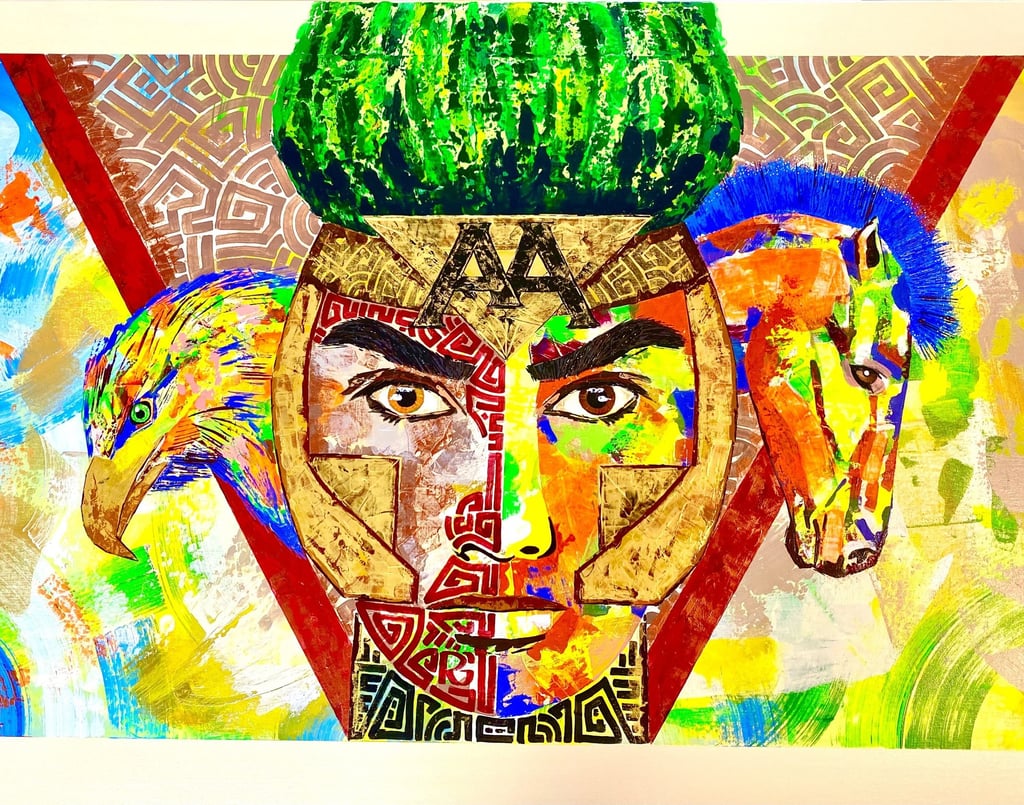
The Promised Land by Ricardo Gutiérrez LGBTQIA+ Colombia
October 2025
Springfield, MO
© 2025 TL Hutton | Obsidian Skull Press. All Rights Reserved
Follow us
Causes we Support